Start With The Monitoring Question
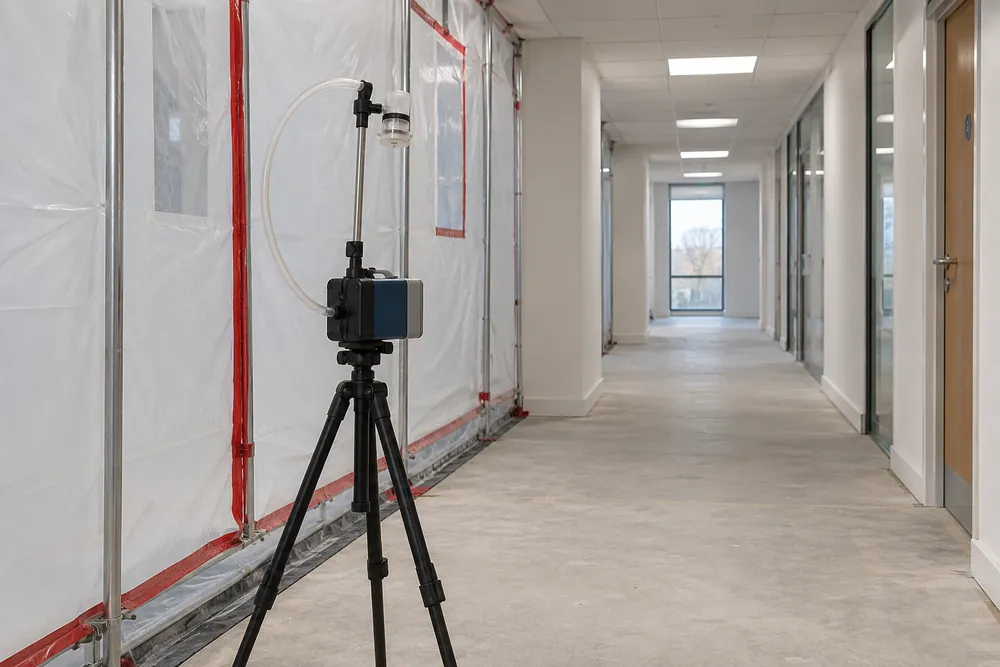
Different types of air monitoring answer different questions. Personal sampling assesses exposure during a task, while static sampling examines conditions at a chosen location. Monitoring around a work enclosure may be used to check controls, and reassurance sampling may support a wider assessment after an incident or completed work.
The analyst should know what happened, what materials are involved and who might be affected. A request for a generic air test can leave the wrong sampling approach specified. Share the removal method, work boundaries and existing survey so the monitoring plan reflects the actual job.
Air Testing Is Not A Material Survey
An air result describes the sampled conditions during the sampling period. It cannot establish that all asbestos has been found in the building fabric. It also does not turn visible debris, incomplete cleaning or an uninvestigated incident into an acceptable work area.
If the concern is whether a board or finish contains asbestos, material analysis is usually the relevant starting point. If the concern is disturbance during refurbishment, the survey and removal information matter alongside monitoring. Ask the analyst to explain both the purpose and limitations of the proposed testing.
HSG248 And Analyst Independence
HSG248, Asbestos: The Analysts’ Guide, sets out recognised procedures for sampling, analysis and clearance. The organisation undertaking asbestos air measurements and clearance certification must hold the appropriate accreditation. Check the UKAS schedule against the specific activity you are commissioning.
For clearance following enclosed licensed removal, agree independent analytical arrangements early. The analyst needs suitable access, enough time and the authority to report failures without programme pressure. Read HSE advice on appointing analysts and surveyors.
Understanding Clearance And Reoccupation
Four-stage clearance is a structured assessment, not simply taking an air sample. It includes preliminary checks, a detailed visual inspection, clearance air monitoring where applicable and a final assessment after the enclosure is dismantled. The full relevant procedure needs to be passed before the certificate for reoccupation is issued.
The removal contractor should have completed its own cleaning and inspection before presenting the area for clearance. If a stage fails, further work and reassessment may be needed. Building managers should agree who receives the certificate and how permission to reopen the area will be communicated.
Programme, Reports And Cost
Air testing costs reflect the purpose, sampling locations, duration, analyst attendance, access arrangements and reporting requirements. Clearance time also depends on the cleanliness and complexity of the work area. Do not programme the analyst as a brief administrative visit at the end of a difficult removal.
Reports should identify the locations, method, relevant conditions and interpretation. Keep monitoring records with the removal documents and asbestos register. If the activity or enclosure changes, confirm whether the monitoring scope still covers it rather than reusing a result from an earlier stage of the project.
From Enquiry To An Agreed Scope
Start by gathering existing asbestos information and describing the planned activity. We review the service requested against that activity and discuss where further detail is needed. A drawing or earlier report is especially useful when several floors, tenants or project phases are involved.
Before an appointment, confirm who can authorise access and who will receive the report or handover records. Agree any exclusions in writing and ask how unexpected findings will be handled. The final scope should leave the building manager and contractor with the same understanding of the task.
The Process, Step By Step
Define The Purpose
Tell the analyst whether the requirement concerns exposure, enclosure controls, reassurance or clearance after removal.
Agree Independent Attendance
Confirm the analytical organisation, relevant accreditation, access and programme before the removal work is due to finish.
Complete The Assessment
The analyst applies the sampling or clearance procedure relevant to the instruction and records any failures or limitations.
Review Before Reopening
Receive and review the relevant report or certificate before communicating the agreed permission to reopen an affected area.
Your Questions Answered
How Do I Arrange Asbestos Air Testing In Newcastle?
Asbestos Air Testing in Newcastle starts with a description of your commercial premises and the decision you need to make. Send the postcode, existing reports, access restrictions and your preferred programme. We can then discuss the relevant scope before a quotation is agreed. Do not disturb suspect material to prepare your enquiry.
What Determines An Air Monitoring Quote In Newcastle?
The cost of asbestos air testing depends on the defined work, building access and records needed at completion. The material and its condition may change the method or the amount of investigation required. Ask for written inclusions and exclusions so you can compare proposals on the same basis rather than price alone.